BPC-157 + TB-500 Stack: Published Study Data
What published studies show about combining BPC-157 and TB-500. Preclinical data on each peptide, study protocols and why human dosing cannot be inferred.
The BPC-157 + TB-500 stack is the most discussed peptide combination in online research communities. It is also the one with the least published evidence for combined use. We went through every indexed study on both peptides and found a clear conclusion: no published paper has tested BPC-157 and TB-500 together in the same animals using a combined protocol. What follows is the individual study data for each peptide, the theoretical logic for stacking, the reconstitution math, vendor pricing and the regulatory status. All efficacy data is from animal models unless stated otherwise.
BPC-157 Study Data
Mechanism and Research Profile
BPC-157 is a 15-amino-acid peptide derived from a protein in human gastric juice. Its primary studied mechanism involves modulation of the nitric oxide system and upregulation of VEGFR2, which promotes angiogenesis at injury sites. The peptide has been tested in rat models of tendon transection, muscle crush injury, gastric ulceration and nerve damage. A 2011 Sikiric review compiled over a decade of Zagreb group findings across these models.
| Study | Species | Route | Dose | Model | Outcome | PMID |
|---|---|---|---|---|---|---|
| Staresinic 2003 | Rat | IP | 10 mcg/kg | Achilles transection | Improved load to failure | 14554208 |
| Cerovecki 2010 | Rat | IP, oral, topical | 10 mcg/kg | MCL transection | Biomechanical and histological improvement | 20225319 |
| Novinscak 2008 | Rat | IP | 10 mcg/kg | Quadriceps crush | Less edema and fibrosis | 18668315 |
| Sikiric 2011 review | Rat (multiple) | IP, oral | 10 ng/kg to 10 mcg/kg | Gastric lesion models | Mucosal protection across models | 21548867 |
| Vascular study 2010 | Rat | Local, IP | 10 mcg/kg | Muscle/tendon vascular | VEGF and VEGFR2 upregulation | 20388964 |
TB-500 Study Data
Mechanism and Research Profile
TB-500 is a synthetic version of Thymosin Beta-4, a 43-amino-acid protein that sequesters G-actin and regulates actin polymerization. Actin dynamics control cell migration, which is essential for tissue repair. TB-4 has been studied in wound healing, cardiac repair and inflammation models. The mechanism is distinct from BPC-157. Where BPC-157 drives new blood vessel formation, TB-500 drives cell motility and cytoskeletal remodeling.
| Study | Species | Route | Dose | Model | Outcome | PMID |
|---|---|---|---|---|---|---|
| Malinda 1999 | Rat | Topical | 5 mcg per wound | Full-thickness skin wound | Accelerated wound closure | 10469335 |
| Bock-Marquette 2004 | Mouse | IP | 150 mcg total | Coronary ligation | Reduced infarct size, improved cardiac function | 15565145 |
| Sosne 2002 | Rat | Topical | 1 mcg/dose | Corneal wound | Faster epithelial resurfacing | 11950239 |
| TB-4 review 2012 | Various | Various | Various | Wound, cardiac, inflammation | Cell migration, anti-fibrotic effects | 22074294 |
What "Stacking" Actually Means
The Theoretical Rationale
The argument for combining BPC-157 and TB-500 rests on complementary mechanisms. BPC-157 promotes angiogenesis through NO and VEGF pathways, supplying new blood vessels to an injury site. TB-500 promotes cell migration through actin dynamics, moving repair cells into the damaged area. In theory, these two processes could be additive: more blood supply and more migrating cells at the same time. This reasoning is mechanistic speculation. It is not experimental evidence.
The Evidence Gap
No published study has administered both BPC-157 and TB-500 simultaneously to the same animals and measured the combined outcome against each peptide alone or against control. A 2025 Achilles tendon study tested both peptides in the same experiment but in separate groups. It compared BPC-157 versus control and TB-500 versus control. Both outperformed saline. The study did not include a BPC-157 + TB-500 group. We emphasize this point because vendor marketing often implies published support for the combination that does not exist.
- Published studies testing both together
- 0
- Published studies testing each separately
- 40+ (BPC-157), 28+ (TB-4)
- BPC-157 primary mechanism
- Angiogenesis via NO and VEGF
- TB-500 primary mechanism
- Cell migration via actin sequestration
- Theoretical basis for combination
- Complementary pathways
- Experimental proof of synergy
- None
Reconstitution and Concentration Math
How Reconstitution Works
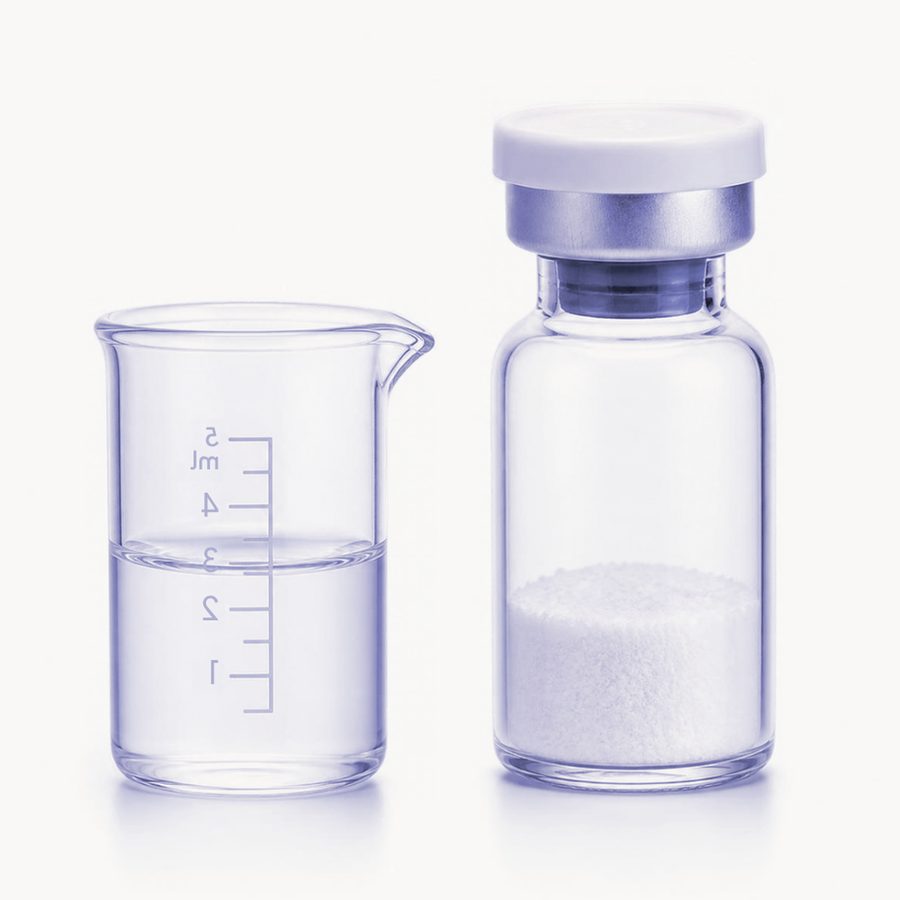
Both BPC-157 and TB-500 are sold as lyophilized (freeze-dried) powder in sealed vials. To use them in a research setting, the powder must be reconstituted with bacteriostatic water. The amount of water added determines the concentration per unit volume. This is arithmetic, not a dosing recommendation.
Example Calculation
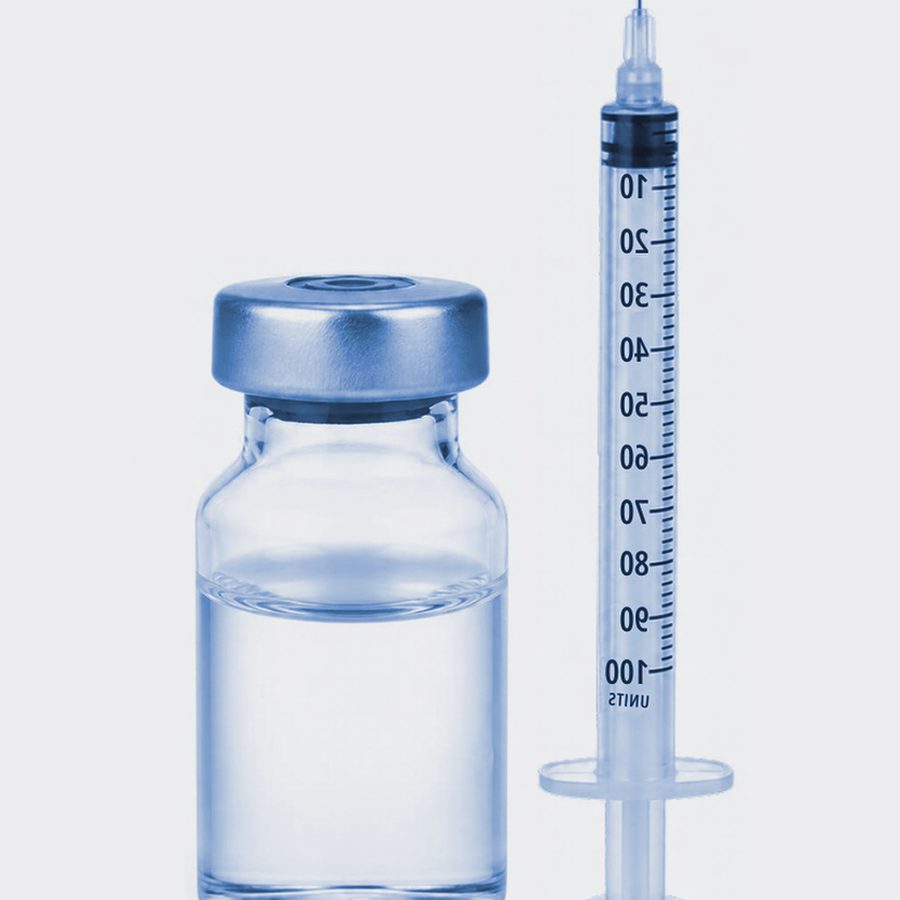
If a vial contains 5 mg of BPC-157 and you add 2 mL of bacteriostatic water, the concentration is 5 mg / 2 mL = 2.5 mg/mL, or 2500 mcg/mL. Drawing 0.1 mL (10 units on a standard insulin syringe) would contain 250 mcg. If you add 1 mL of water instead, the concentration doubles to 5 mg/mL. These numbers describe the math. They do not constitute a protocol for any species. For the interactive version, see our peptide calculator.
Vendor Pricing Comparison
Buying Separately vs the Blend
Peptide God sells BPC-157 at $34.95 and TB-500 at $35.00. Purchasing both separately totals $69.95. The same vendor offers a pre-blended BPC-157 + TB-500 vial at $59.95, a saving of $10.00. However, the blend product page does not disclose the milligram amount of each peptide, the ratio between them, or a Certificate of Analysis. Real Peptides sells BPC-157 at $43.20 for a confirmed 10 mg vial with a lot-specific COA but does not currently offer TB-500 or a blend product.
| Product | Vendor | Price | Vial Size | COA Published |
|---|---|---|---|---|
| BPC-157 | Peptide God | $34.95 | Not disclosed | No |
| TB-500 | Peptide God | $35.00 | Not disclosed | No |
| BPC-157 + TB-500 blend | Peptide God | $59.95 | Not disclosed | No |
| Separate purchase total | Peptide God | $69.95 | N/A | N/A |
| BPC-157 10 mg | Real Peptides | $43.20 | 10 mg (confirmed) | Yes, lot-specific HPLC |
We cannot calculate a meaningful price-per-milligram for Peptide God products because the vial sizes are not stated. Real Peptides' BPC-157 works out to $4.32 per milligram at the 10 mg size. The blend's value proposition depends entirely on what is inside the vial, which the vendor does not disclose. For a full vendor comparison, visit our Peptide God BPC-157 + TB-500 review.
Storage and Handling Considerations
Lyophilized peptide vials are stable at room temperature during shipping. Once the sealed vial arrives, store it in a freezer (-20 C) for long-term stability or a refrigerator (2-8 C) for short-term storage. After reconstitution with bacteriostatic water, the solution must be refrigerated and used within 28 days. Do not freeze reconstituted peptide solutions, as freeze-thaw cycles can degrade the peptide chain. Bacteriostatic water from Real Peptides ($4.80 for 10 mL) contains 0.9% benzyl alcohol as a preservative, which inhibits microbial growth in multi-use vials.
If purchasing separate BPC-157 and TB-500 vials rather than a pre-blended product, each peptide is reconstituted independently in its own vial. Mixing two reconstituted solutions into a single syringe is a practice discussed in online communities, but no published protocol describes stability, compatibility or degradation data for such combinations. The pre-blended product from Peptide God sidesteps this concern but introduces the separate issue of undisclosed ratios and total content.
WADA and Competitive Sport
Both BPC-157 and TB-500 are prohibited by the World Anti-Doping Agency under the S0 category, which covers non-approved substances. This prohibition applies at all times, in and out of competition, starting from the 2022 Prohibited List. Athletes subject to WADA testing who use either peptide or the combination risk an anti-doping rule violation. The ban covers both the individual peptides and any blend containing them. For the current prohibited list specifics, see our WADA peptides status page.
FAQ
Is the BPC-157 + TB-500 stack proven to work?
No published study has tested both peptides together in the same animals. Each peptide individually produced positive outcomes in separate animal injury models. The combination is based on theoretical mechanism complementarity, not on experimental data from combined use.
Is the blend cheaper than buying separately?
At Peptide God, the blend is $59.95 versus $69.95 for the two individual vials, saving $10.00. The blend does not disclose the milligram content of each peptide, so we cannot verify that you receive the same total amount as two separate vials.
Can I use the reconstitution calculator for dosing?
The calculator performs concentration arithmetic. It tells you how many micrograms are in a given volume of reconstituted solution. It does not generate dosing recommendations. Published rat studies most commonly used 10 mcg/kg administered intraperitoneally. This is an animal research dose, not a human protocol. Our dosage protocols page explains why allometric scaling does not produce a valid human dose.
Which vendor has better testing documentation?
Real Peptides publishes lot-specific Certificates of Analysis with HPLC purity data for BPC-157. Peptide God does not display COA documentation on any product page we reviewed. Real Peptides does not carry TB-500, so researchers wanting both peptides from a COA-verified source currently have limited options.
Discuss any peptide product with a qualified physician before use. The products described on this site are sold for laboratory and research purposes and are not approved for human therapeutic use by any regulatory agency.
Compare the current picks
Prices, sizes and ratings side by side, updated when the merchant pages change.
Compare peptides