Peptide Reconstitution Calculator
Free peptide reconstitution calculator. Enter vial size and water volume to get concentration per unit. Arithmetic tool only, not dosing advice.
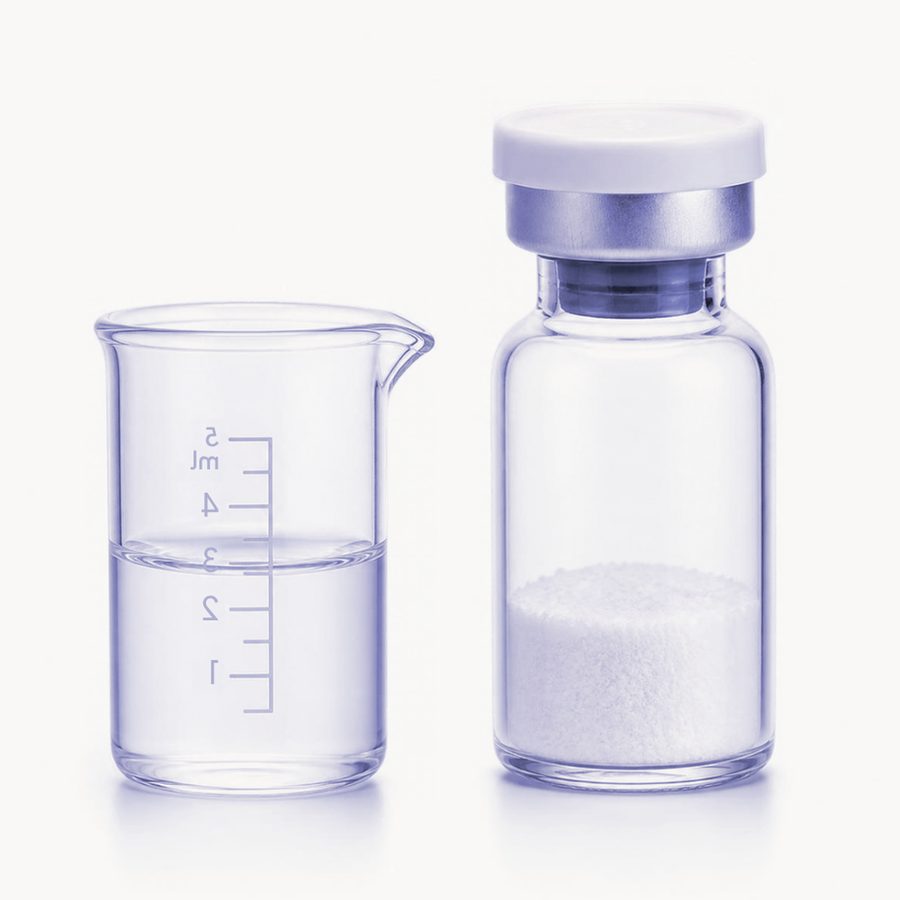
A peptide dosage calculator removes the guesswork from reconstitution math. When you dissolve lyophilized powder in bacteriostatic water, the concentration of the resulting solution depends on two numbers: the mass of peptide in the vial and the volume of water you add. We built the calculator below to handle that arithmetic for you. Enter your vial size and water volume, and it returns the concentration per milliliter and per 0.1 ml tick mark on a standard insulin syringe.
How Reconstitution Math Works
The Core Formula
Concentration equals mass divided by volume. That is it. If you have a 10 mg vial and add 2 ml of bacteriostatic water, you get 5 mg per ml, which is 5000 mcg per ml, or 500 mcg per 0.1 ml. Each tick on a 1 ml insulin syringe represents 0.1 ml, so each tick delivers 500 mcg. We use this formula throughout the site for every product where the vial size is disclosed.
Step-by-Step Conversion
Start with the peptide amount in milligrams. Multiply by 1000 to convert to micrograms. Divide by the total water volume in milliliters. That gives you mcg per ml. Then multiply by 0.1 to get the amount per tick mark. The formula written out:
mcg per 0.1 ml = (peptide mg x 1000) / water ml x 0.1
Step-by-Step Reconstitution Process
- Gather your supplies You will need the lyophilized peptide vial, bacteriostatic water, alcohol swabs, and an insulin syringe (1 ml, 29-31 gauge)
- Swab both stoppers Wipe the rubber stopper on both the peptide vial and the bacteriostatic water vial with an alcohol swab. Let each dry for about 10 seconds
- Draw the water Pull the desired volume of bacteriostatic water into the syringe using the calculator result above to determine how much
- Add water slowly along the glass wall Insert the needle into the peptide vial at an angle. Release the water so it runs down the inside wall of the vial rather than hitting the powder directly
- Swirl gently to dissolve Tilt and rotate the vial. Do not shake. The powder should dissolve into a clear solution within 1 to 2 minutes
- Label, date and refrigerate Write the peptide name, concentration and reconstitution date on the vial. Store at 2-8 C immediately
Common Vial Sizes and Concentrations
The table below shows concentration values for the most frequently used vial and water combinations. All figures assume complete dissolution with no losses during the reconstitution process.
| Vial (mg) | Water (ml) | mcg per 0.1 ml | mcg per ml |
|---|---|---|---|
| 5 | 1 | 500 | 5000 |
| 5 | 2 | 250 | 2500 |
| 5 | 2.5 | 200 | 2000 |
| 10 | 1 | 1000 | 10000 |
| 10 | 2 | 500 | 5000 |
| 10 | 2.5 | 400 | 4000 |
| 10 | 5 | 200 | 2000 |
- 1 mg
- 1000 mcg
- 0.1 ml
- 1 tick on a standard insulin syringe
- 2-8 C
- recommended storage for reconstituted solution
- 3-4 weeks
- typical shelf life after reconstitution
- 0.9%
- benzyl alcohol in bacteriostatic water
Supplies You Will Need
Bacteriostatic Water
Bacteriostatic water contains 0.9% benzyl alcohol, which inhibits microbial growth and allows you to draw from the same vial multiple times over several weeks. We list Real Peptides Bacteriostatic Water at $4.80 for a 10 ml vial. Standard peptide reconstitution calls for 1 to 2.5 ml per vial, so a single 10 ml bottle covers multiple reconstitutions. See our Real Peptides Bacteriostatic Water product page for full details.
Insulin Syringes
A 1 ml insulin syringe with a 29 to 31 gauge needle is the standard tool for both reconstitution and drawing from the reconstituted vial. The 0.1 ml graduations printed on the syringe barrel correspond directly to the concentration figures from our calculator.
Alcohol Swabs
We recommend individually wrapped 70% isopropyl alcohol swabs for wiping rubber stoppers. This step reduces the risk of introducing contaminants into the solution during reconstitution.
FAQ - Peptide Reconstitution Calculator
How much bacteriostatic water should I add?
The volume depends on the concentration you need. Adding 2 ml to a 5 mg vial gives 250 mcg per 0.1 ml. Adding 1 ml to the same vial gives 500 mcg per 0.1 ml. Use the calculator above to experiment with different volumes before committing. There is no single correct answer because the target concentration varies by research protocol.
How long does reconstituted peptide last?
Most vendors and published protocols recommend using reconstituted peptide within 3 to 4 weeks when stored at 2-8 C. The benzyl alcohol in bacteriostatic water slows microbial growth but does not sterilize the solution permanently. If the liquid turns cloudy, develops particles or changes color, discard it.
What is the difference between sterile water and bacteriostatic water?
Sterile water contains no preservative. Once the stopper is pierced, there is nothing to prevent bacterial growth, so the entire volume should be used in a single session. Bacteriostatic water contains 0.9% benzyl alcohol as a preservative, making it suitable for multi-use vials over multiple weeks. For any protocol involving repeated draws from the same reconstituted vial, bacteriostatic water is the standard choice.
What if the powder will not dissolve?
Tilt and gently rotate the vial. Do not shake it. Vigorous shaking can damage the peptide structure through shear forces. If the powder does not dissolve within a few minutes, let the vial sit at room temperature for 5 to 10 minutes and try again. Persistent cloudiness or floating particles may indicate degradation from improper storage before reconstitution. In that case, the vial should not be used.
For handling and long-term storage guidance, see our peptide storage and handling guide.
Discuss any peptide product with a qualified healthcare provider before use. This calculator is an arithmetic tool and does not constitute medical or dosing advice. The peptides described on this site are sold for laboratory and research purposes and are not approved for human therapeutic use by any regulatory agency.
Compare the current picks
Prices, sizes and ratings side by side, updated when the merchant pages change.
Compare peptides